QUIRK REPORTS — OFFICIAL CASE FILE
CASE NUMBER: QR-2026-37571
THE LADY WHO NEVER LEFT: SCOTLAND'S MOST FAITHFUL GHOST REFUSES TO CHECK OUT OF GLAMIS CASTLE
Classification: Ghost / Spirit — Persistent Apparition
Date of Report: 2026 | Date(s) of Event: Ongoing — most extensively documented sightings 1870s–1950s
Location: Glamis Castle, Vale of Strathmore, Angus, Scotland
Primary Witness: Margaret Hollis (name changed) and multiple corroborating witnesses across approximately 150 years
Assigned Investigator: Fox Quirk, Founder & Chief Reporter, Quirk Reports
This report is based on documented paranormal accounts. Names and identifying details have been changed to protect those involved.
WITNESS STATEMENT
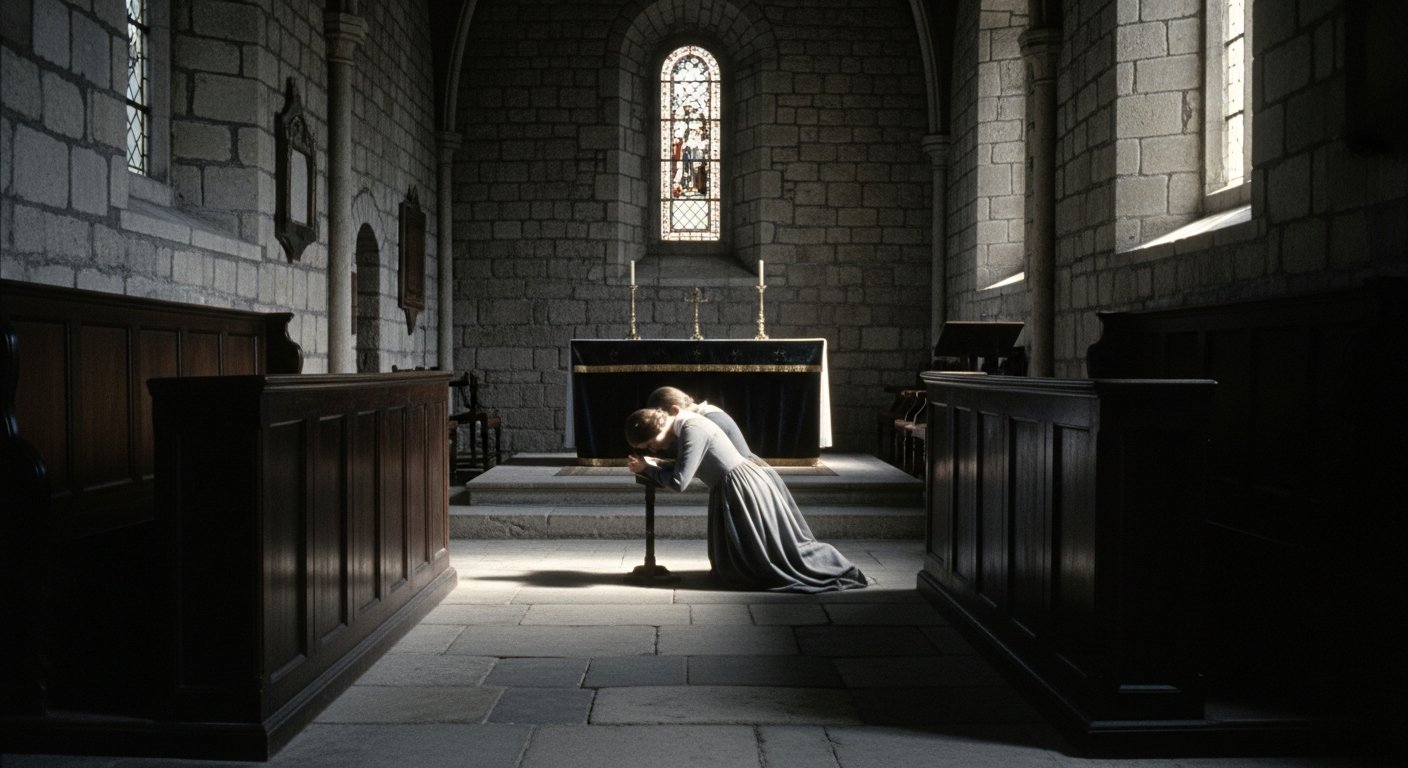
Glamis Castle, the ancestral seat of the Earls of Strathmore and Kinghorne, rises from the Vale of Strathmore in pink sandstone and accumulated centuries, its towers visible from miles across the flat Angus farmland. It is the childhood home of the late Queen Mother. It is, by any reasonable measure, Scotland's most thoroughly haunted building. And at the centre of its catalogue of the unexplained is a figure that has been witnessed consistently for over one hundred and fifty years — always in the same location, always in the same posture, always wearing the same heavy grey dress that no living resident of the castle has ever owned.
She is called the Grey Lady, and her story begins not with a sighting but with an injustice. In 1537, Lady Janet Douglas of Glamis was burned alive on Castle Hill, Edinburgh, on charges of witchcraft and conspiracy against King James V — charges that were, by all historical assessment, entirely fabricated. James bore a virulent hatred of the Douglas family and weaponised the witchcraft laws accordingly. By contemporary accounts, Janet was a woman of deep piety and gentle temperament. She died with extraordinary composure, reportedly in continuous silent prayer. She was innocent. She appears, in some form, not to have left.
Reports of a grey female figure kneeling in the castle chapel emerged within years of the execution and have continued, with remarkable consistency of detail, ever since. It was in autumn 1876 that one of the most significant early documented accounts was recorded. Margaret Hollis, a guest visiting from Edinburgh, was being escorted through the castle's older wing by a young footman when she stopped abruptly in the chapel doorway.
"There was a woman already there. Kneeling at the far end of the chapel before the altar. She was wearing grey — a very old-fashioned grey dress of some heavy material — and her head was bowed completely forward. I assumed she was one of the family at prayer and began to back away so as not to disturb her, but the footman touched my arm and looked at me with a very strange expression. I looked back into the chapel. The woman was gone. There had been no sound. The chapel has only one entrance and she had not passed us. I asked who she was and the young man said only: that is our Lady. I did not sleep well that night."
Hollis recorded these events in a letter to her sister, preserved in private family papers. Significantly, she was by her own account deeply sceptical of spiritualism — then fashionable in Edinburgh society — and her tone throughout is that of a rational woman confronting an experience that refuses to fit any available category. She returned to the chapel the following morning and noted the stone floor, the single entrance, and what she described as the sheer physical impossibility of what she had witnessed.
The sightings continued with uncommon regularity through the late Victorian and Edwardian periods. In 1904, two visiting clergymen — referred to here as Reverend Callum Forsyth and Reverend Andrew Pryce — entered the chapel together during a Church of Scotland heritage visit, with no prior knowledge of the castle's ghost stories. Both men stopped. Both saw the kneeling figure. Forsyth moved to approach her, believing her to be a distressed visitor. He later wrote:
"She held herself as a person holds themselves when grief has become so large it must be contained by sheer physical rigidity."
Before he could take more than two steps, the figure vanished. Crucially, both men gave their accounts independently before comparing notes. Their descriptions matched in every material detail — including the observation by Pryce that the figure's edges appeared slightly translucent, "in the way that a reflection is slightly wrong."
Between 1931 and 1947, a castle housekeeper referred to in research documents as Agnes Telfer reported seeing the Grey Lady on three separate occasions — twice in daylight, once by lamplight — always in the same location before the altar. She reportedly described the figure to a local journalist with a phrase that has stayed with every investigator who has since encountered this case: "She looks like someone who is still waiting to be told the truth."
In 1952, a Scottish psychical research team spent three nights in the chapel with recording equipment considered sophisticated for its era. No photographic evidence was obtained. However, the team documented significant and localised temperature drops directly in front of the altar — consistent in precise location with every prior witness account — and one team member reported observing a faint luminescence in that area lasting approximately four seconds on the second night.
Sightings have continued into the twenty-first century. A visitor in 2019, who declined to be named even under a pseudonym, reported seeing a grey figure in the chapel for eight to ten seconds before it simply ceased to be visible. She had researched nothing about Glamis before her visit. She described the figure's posture as heartbreaking.
EVIDENCE SUMMARY
- Primary documentary evidence: Margaret Hollis's 1876 letter to her sister, preserved in private family papers and referenced across multiple subsequent investigations.
- Corroborating independent accounts: Reverend Forsyth and Reverend Pryce (1904) — accounts given separately before comparison, matching in all material details.
- Long-term staff testimony: Agnes Telfer, castle housekeeper, three sightings documented across 1931–1947.
- Multiple simultaneous witnesses: At least four documented instances before 1920 of more than one witness observing the figure at the same time.
- Physical trace evidence: Localised temperature anomalies recorded by the 1952 psychical research team, consistently located in front of the altar — matching the position described by every witness account.
- Luminescence report: One investigator observed faint unexplained light in the same location, lasting approximately four seconds. Unconfirmed by equipment.
- Consistency of description across 150+ years: Every witness independently describes an identically positioned female figure in pre-Victorian grey dress, always kneeling, always facing away from the door, never interacting with observers.
- Castle institutional records: Staff acknowledged the Grey Lady as a standing feature of castle life by the mid-nineteenth century. Accumulated unexplained visitor reports continue to the present day.
FOX'S ANALYSIS
Right. I'll level with you. I've reviewed a lot of haunting cases in my career. Most of them are theatrical. Doors slam, chains rattle, someone's grandmother descends a staircase in a nightgown and everyone declares it paranormal rather than simply concerning. The Grey Lady is not that kind of ghost, and this is not that kind of case.
What we have here is, frankly, one of the most disciplined haunting records in British paranormal literature. The consistency alone would give any sceptic pause — we're talking about independent witnesses, across different centuries, different social classes, different levels of prior belief, describing the same figure in the same dress in the same posture in the same location. That's not a rumour that spreads through a building. Rumours mutate. They grow arms, and fangs, and eventually someone's seeing a headless horseman riding through the kitchens. This one hasn't mutated. In nearly five hundred years, the Grey Lady has not gained so much as a new accessory. You could say she has a very consistent fashion sense — she's really committed to the grey. I respect that. I myself have owned the same flat cap since 1987 and I'm not changing it for anyone.
The 1904 clergy account is the one that keeps me up at night — and I mean that professionally, not because I'm afraid, I'm absolutely not afraid, I simply find it intellectually stimulating at 3 AM. Two men enter a chapel together. Neither has been briefed. Both see the same figure. They give their accounts before they've spoken to each other. In investigative terms, that's about as good as it gets without a photograph. You can't coach that. You can't coordinate that. They weren't the types to invent things — these were Church of Scotland clergymen in Edwardian Scotland, not exactly the demographic queuing up to fabricate supernatural encounters for social cachet.
Now, the theoretical framework. Residual haunting would explain the repetition — the same posture, the same location, the complete lack of interaction with witnesses. If intense emotional events can imprint on physical space, then the final hours of a devout woman who was wrongly condemned and who spent her last moments in prayer is exactly the kind of material you'd expect to leave a mark. The problem is that residual hauntings don't explain selective visibility — why some visitors on the same tour, standing in the same doorway, see her and others don't. That's the detail that sticks in my teeth like a particularly stubborn bit of evidence. You might say it's the spectre of a more complex explanation. I'll see myself out.
The intelligent haunting possibility is, if anything, more uncomfortable. If something of Janet Douglas remains conscious and present — if Reverend Forsyth's phrase holds — that she is waiting to be told the truth — then we are looking at nearly five centuries of vigil maintained in a place that was taken from her, for a crime that never happened, by a king who died eleven years later and considerably less gracefully. The historical injustice here is not decorative background. It is the entire mechanism of the case. She was innocent. She was murdered by her government. Her name was not formally rehabilitated for centuries. If grief can calcify into something permanent, hers had every reason to.
I should note for the record that my personal feelings about the supernatural are complicated. I have no issue with ghosts. Ghosts are people — or were. I have tremendous sympathy for the Grey Lady. She is a victim of an appalling miscarriage of justice who has been described, consistently, across one and a half centuries, as heartbreaking. The word keeps appearing in witness accounts as if the witnesses have no other available term, and honestly, reading this file, I don't either. I do, however, have issues with entities that are invasive and inconsiderate, and the Grey Lady is neither. She minds her own business. She stays in her chapel. She doesn't probe anyone. Unlike certain extraterrestrial visitors I could name — and have named, repeatedly, in Quirk Reports case files QR-2024-00891 through QR-2024-00897 — she has basic manners.
Bottom line: this case is about as robust as cold case paranormal documentation gets. The absence of photographic evidence is a limitation, but given that sightings are unpredictable and brief, I'm not holding that against her. The temperature data from 1952 is genuinely interesting and deserves modern follow-up with equipment that isn't powered by wishful thinking and valves. I'd like to see a properly resourced thermal imaging investigation of that specific altar area. I would attend personally. I would bring my notebook, my press pass, and a healthy respect for a woman who has waited patiently for nearly five centuries and clearly has no intention of leaving until she gets what she came for.
Some ghosts haunt. This