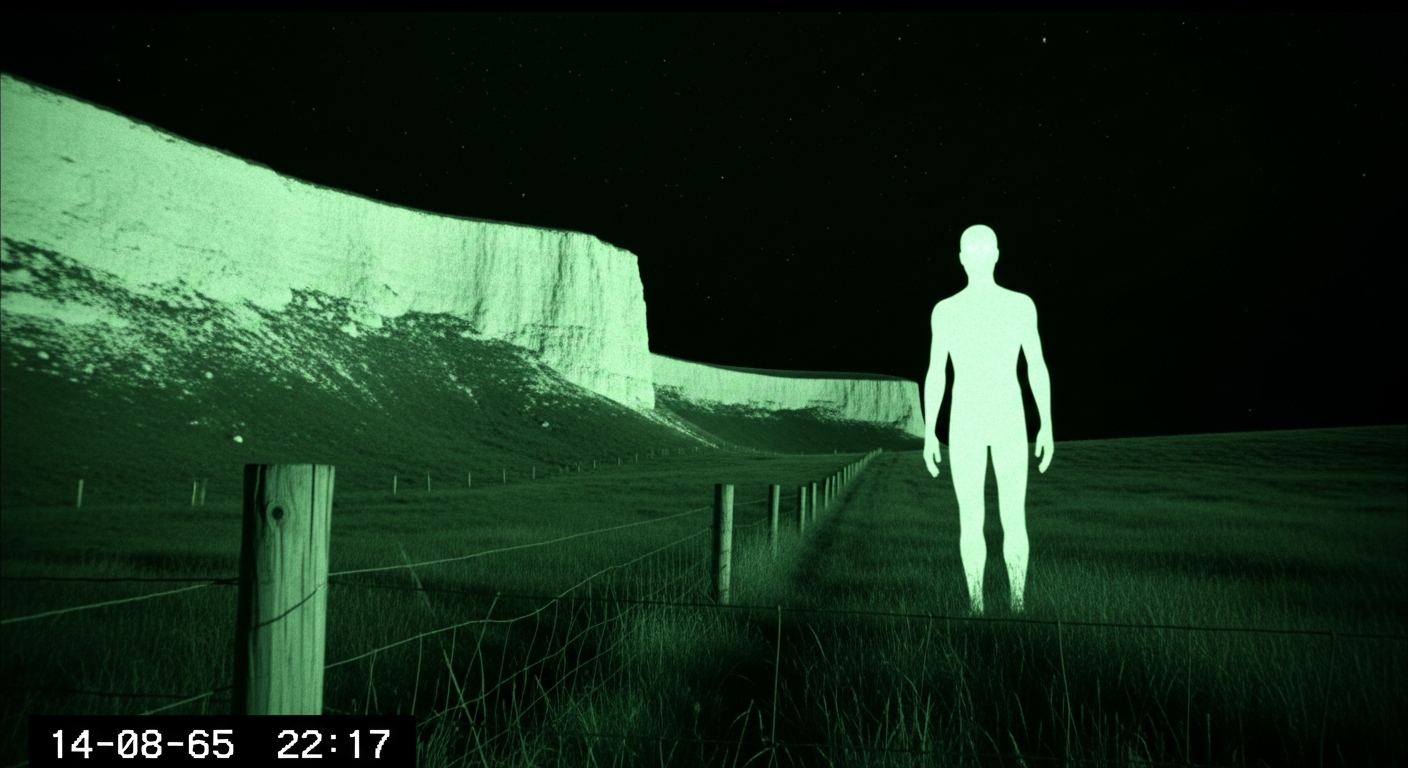
QUIRK REPORTS — OFFICIAL CASE FILE
Case Number: QR-2026-46852
🐟 SOMETHING FISHY THIS WAY COMES: THE THETIS LAKE MONSTER THAT WALKED LIKE A MAN 🐟
Classification: Cryptid — Aquatic Humanoid
Date of Incident: August 19 & August 23, 1972
Location: Thetis Lake, British Columbia, Canada
Primary Witness: Robin Calloway (name changed)
Reporting Officer: Fox Quirk, Senior Paranormal Correspondent, Quirk Reports
This report is based on documented paranormal accounts. Names and identifying details have been changed to protect those involved.
WITNESS STATEMENT
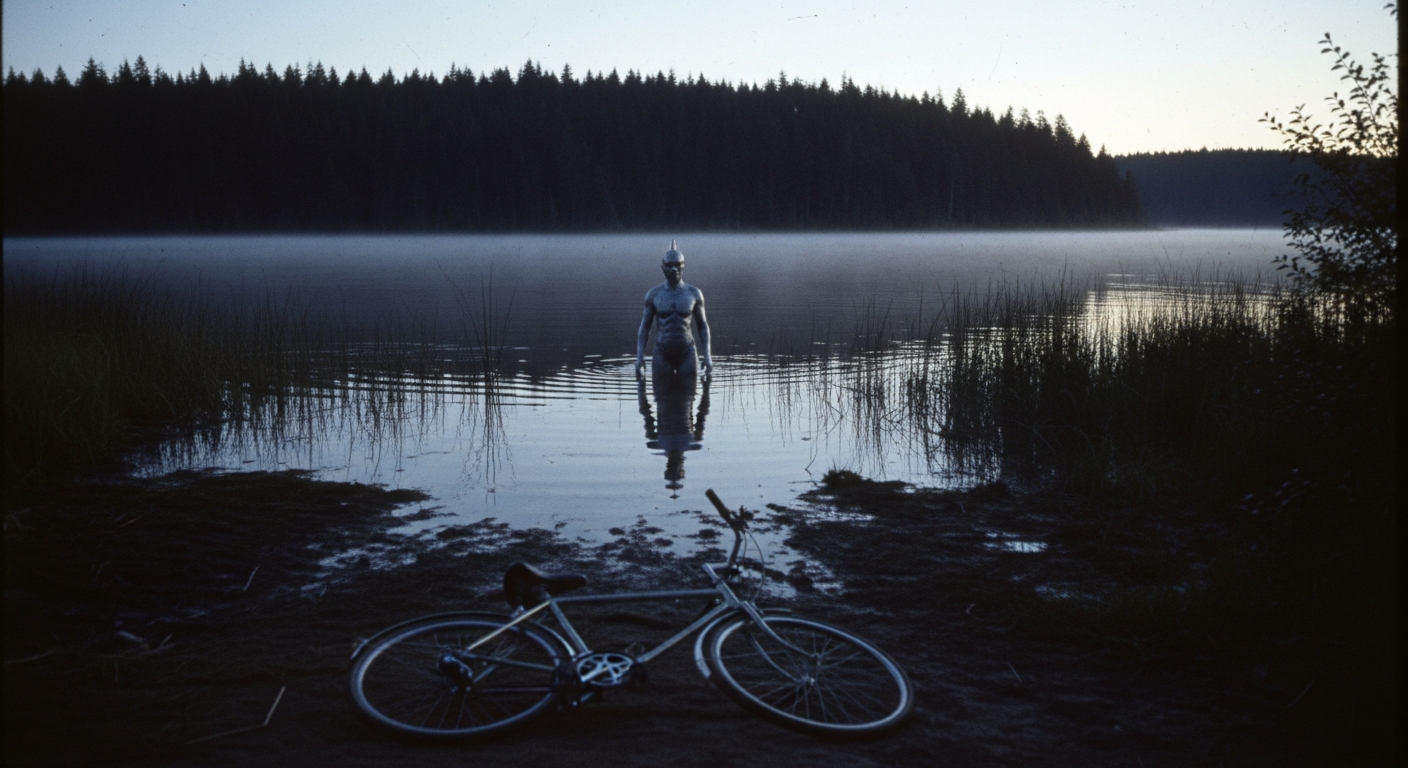
The afternoon of August 19, 1972 began without any particular promise of the extraordinary. Robin Calloway and his friend Marcus Webb, both seventeen, cycled out to Thetis Lake — a quiet, forested body of water approximately eight kilometres northwest of Victoria — for no more remarkable reason than that it was hot, it was free, and there was nowhere else to be. Thetis Lake Regional Park was exactly what it appeared to be: a serene stretch of second-growth forest wrapped around clear water, where locals swam and dogs fetched sticks and nothing of any consequence had ever happened.
They had been at the lake for approximately one hour when Robin noticed something at the water's edge, roughly thirty feet away.
It was standing upright.
Robin would later describe the moment to Royal Canadian Mounted Police investigators with a precision that struck officers as remarkable. He did not hedge. He did not reach for comfortable misidentifications. He described a bipedal creature, approximately five to five-and-a-half feet tall, covered entirely in silver-grey scales that caught the late afternoon light like the flank of a large fish. The body was broadly humanoid in structure — two legs, two arms, a torso, a discernible head — but the proportions were wrong in ways that registered immediately and viscerally. The head was large and rounded. The face, glimpsed only briefly, was flat, its features indistinct at that distance. Most strikingly, a ridge of hard, pointed spines — each approximately three inches in length — ran from the crown of the skull down the spine to the creature's lower back, resembling the dorsal fin of some enormously enlarged fish. The hands, Robin noted with particular clarity, appeared to be webbed.
The creature stood at the shoreline for approximately two seconds. Then it began moving toward them.
"It wasn't a person in a wetsuit," Robin told investigators. "It wasn't anything I had a name for."
Robin and Marcus did what anyone with functioning survival instincts would do: they ran. They recovered their bicycles and fled the park, Robin reporting that he could hear movement in the undergrowth behind them for some distance before it ceased. He did not look back. Upon returning to Victoria, the two teenagers went directly to the RCMP — a detail that investigators themselves would later flag as significant. People startled by shadows or birds do not file police reports. Robin and Marcus sat down separately and gave statements that matched in every material detail.
The RCMP opened a formal investigation. Officers dispatched to the lake found the shoreline disturbed, with soft mud at the water's edge showing evidence consistent with something large having recently entered or emerged from the lake. No creature was found. No definitive physical evidence was recovered.
Four days later, on August 23, a second incident was reported. An adult man — here identified as Alan Fenton — came forward to report that a similar creature had emerged from the upper lake and approached him. Fenton's description matched Robin's with striking consistency: the scales, the upright posture, the spinal ridge. Fenton added one detail Robin had not mentioned — projections along the sides of the creature's face that he believed had slashed at him during the encounter. He presented a laceration on his hand, the origin of which could not be definitively established. Crucially, RCMP officers who attended the scene shortly after Fenton's report discovered a clear impression in the mud at the water's edge: a handprint, webbing visible between the splayed fingers, that did not correspond to any known local animal.
Months after the incidents, a Victoria family claimed that a large South American tegu lizard they had owned had escaped around the time of the sightings, suggesting the witnesses had encountered their pet. RCMP investigators looked into the claim. The tegu lizard is a quadruped. It does not walk on two legs. It does not possess a spinal ridge. It does not have webbed hands. The claim was noted but could not account for the specifics of either witness statement, the second encounter, Fenton's injury, or the handprint in the mud.
Robin Calloway, speaking to a researcher some years later, expressed clear frustration with the tegu explanation's subsequent acceptance as received wisdom: "I knew what a large lizard looked like. That was not a large lizard."
The RCMP investigation was ultimately closed without a definitive conclusion. Neither witness ever recanted.
EVIDENCE
- Separate, consistent witness statements: Robin Calloway and Marcus Webb gave independent accounts to RCMP that matched in every significant detail regarding appearance, behaviour, and timeline.
- Second independent witness (Alan Fenton): An adult, unconnected to the original witnesses, reported an encounter at the same location four days later with a creature matching the prior description.
- Physical disturbance at shoreline (Incident 1): RCMP officers noted disrupted mud at the water's edge consistent with a large creature having emerged from or entered the water.
- Webbed handprint (Incident 2): Officers confirmed the presence of an unusual handprint in the mud near the upper lake, with visible webbing between the fingers, not matching any known local animal.
- Laceration on Alan Fenton's hand: Injury noted at time of report; causation not definitively established.
- Formal RCMP investigation: Law enforcement treated the reports with sufficient seriousness to open and conduct a formal investigation, with wildlife experts consulted.
- Tegu lizard claim: Investigated by RCMP; determined insufficient to explain the reported specifics. Remains unconfirmed.
FOX'S ANALYSIS
Alright. Let's wade in — and I mean that both figuratively and, knowing my luck with bodies of water since The Incident We Don't Discuss, perhaps not literally.
The Thetis Lake case is one that I keep returning to, and not just because I have a personal and professionally non-negotiable interest in anything that walks on two legs and shouldn't. What strikes me every single time I go back through the file is the structure of this case. Strip away the sensational details — and yes, I know, scaled humanoid walking out of a Canadian lake is fairly sensational — and what you have left is actually quite solid.
You've got two teenagers who, faced with a choice between looking foolish and reporting what they saw, chose to report it. To the police. Separately. With matching accounts. You know what teenagers don't do for fun in 1972? File RCMP reports. That's not the prank. The prank is telling your mates down at the diner. These boys went to law enforcement, sat in separate rooms, and told the same story. That's not nothing. That's actually rather a lot.
Then — and this is the part that really gets my tail bushing up — four days later, an adult with no known connection to the original incident reports the same creature at the same lake. And there's a handprint in the mud. A webbed handprint. I've been doing this job long enough to know that you can explain away one witness with imagination and you can explain away nerves and you can explain away popular culture — those Gill-man films were absolutely doing the rounds by '72, I won't pretend otherwise. But you cannot explain away a physical impression in mud that officers confirmed on the scene. Mud doesn't lie. Mud has never seen Creature from the Black Lagoon.
Now, the tegu lizard explanation. I want to be fair here, because I believe in fair. I genuinely do. A large escaped reptile is the kind of sensible, terrestrial explanation that Occam's Razor reaches for instinctively. But here's the thing about Occam's Razor — it's meant to cut to the simplest explanation that actually fits the evidence, not the simplest explanation, full stop. A tegu walks on four legs. It doesn't have a spinal ridge. It doesn't have webbed hands. It doesn't leave a webbed handprint. The tegu theory doesn't scale up to the evidence — and I make absolutely no apology for that pun.
I've seen what happens when a convenient explanation gets picked up by the press. It gets reprinted. It gets accepted. It becomes the thing everyone knows, like a rumour that forgot it was a rumour. Fifty years on, half the articles you'll find on Thetis Lake lead with "escaped lizard" and end there. Robin Calloway spent years watching a non-explanation become the explanation, and I understand his frustration deeply. I once watched a tabloid attribute my own entirely legitimate alien probe incident to "a camping mishap." The indignity was, I assure you, unspeakable.
What was it? I won't pretend to know. The aquatic humanoid category has more entries than I'd like and fewer confirmed specimens than I need. Something came out of that lake twice in the summer of 1972. It was covered in scales. It walked upright. It had webbing. It left prints. It did not come back — or at least, not where anyone could report it. Maybe it decided Victoria wasn't worth the trouble. Honestly, fair enough. The real estate is expensive.
What I will say is this: if something silver and scaled ever comes walking out of a lake toward me, I am not waiting around to determine whether it's a misidentified reptile. I have sat in a chair I was not designed to sit in, at altitudes I was not designed to visit, and I have learned my lesson about waiting to see what happens next. Sometimes the correct response is immediate departure.
I just hope, for Robin's sake, that whatever it was found somewhere quieter to be. It deserved better than being explained away as someone's escaped pet. So did he.
CREDIBILITY RATING
Rating: 7.5 / 10
Reasoning:
- Multiple independent witnesses (+3): Two original witnesses with matching accounts, plus a second independent adult witness four days later. This is a genuinely strong evidential structure.
- Physical evidence (+2): Confirmed shoreline disturbance and, critically, a webbed handprint verified by attending officers. Physical traces elevate this case significantly above purely testimonial accounts.
- Official investigation (+1): RCMP opened and conducted a formal investigation, consulting wildlife experts. Law enforcement credibility lends weight to the seriousness with which the reports were treated.
- Witness behaviour consistent with genuine experience (+1): Both primary witnesses went directly to police. Neither ever recanted. Long-term consistency of account is noted.
- Cultural contamination possibility (-1): The Creature from the Black Lagoon parallel is too close to entirely dismiss as a potential influence on how the experience was interpreted and described, particularly by the teenage witnesses.
- Laceration unconfirmed (-0.5): Fenton's hand wound is noted but not definitively linked to the creature encounter.
Last updated: